Category Archives: Astronomy

Newly Discovered Exoplanet TOI‑1452 b: A Vast Ocean World Orbiting Two Stars
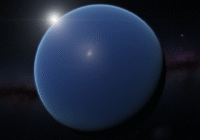
Scientists have identified a remarkable exoplanet, TOI-1452 b, that may be unlike anything we have in our solar system — a “water world” completely submerged in an endless global ocean, orbiting two stars approximately 100 light-years away in the constellation Draco.   Here’s a closer look at what makes this discovery so exciting, and what… Read More: Newly Discovered Exoplanet TOI‑1452 b: A Vast Ocean World Orbiting… »

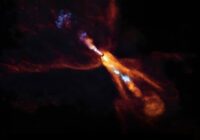
Astronomers Catch the Moment a Solar System Is Born Around Young Star HOPS-315

In a remarkable breakthrough, astronomers have for the first time witnessed the very beginning of a solar system forming around a young star named HOPS‑315—a glimpse into what our own solar system may have looked like some 4.5 billion years ago.   Located approximately 1,300 light-years from Earth, HOPS-315 is still in its infancy, about… Read More: Astronomers Catch the Moment a Solar System Is Born Around… »

The Methuselah Star: One of the Universe’s Oldest — and Why It Once Seemed to Be Older Than the Universe Itself

Just 190 light-years away in the constellation Libra lies a stellar relic from the dawn of our Galaxy: HD 140283, better known as the “Methuselah Star”. With a shockingly low abundance of heavy elements and a blistering speed through space, this unassuming star has earned a reputation for being ancient.   In 2013, astronomers using… Read More: The Methuselah Star: One of the Universe’s Oldest — and… »

The 29-Year-Old Computer Scientist Who Helped Capture the First-Ever Image of a Black Hole

In April 2019, the world witnessed something that once seemed impossible — the first-ever image of a black hole. It wasn’t a scene from a science fiction movie, but a real photograph taken by a global network of telescopes known as the Event Horizon Telescope (EHT). Behind this monumental scientific breakthrough stood a brilliant 29-year-old… Read More: The 29-Year-Old Computer Scientist Who Helped Capture the First-Ever Image… »

Scientists Capture First-Ever Image of a Planet Being Born — WISPIT 2b

In a discovery that reshapes our understanding of how worlds are formed, astronomers have photographed a planet in the process of being born — a first in human history. The newborn gas giant, named WISPIT 2b, is seen forming inside a ring of dust surrounding a young star located 437 light-years away in the constellation… Read More: Scientists Capture First-Ever Image of a Planet Being Born —… »

3I/ATLAS: The Mysterious Interstellar Comet That’s Rewriting the Rules of Space

Something extraordinary is passing through our cosmic neighborhood — a true wanderer from another star. Known as 3I/ATLAS, this newly discovered interstellar comet has captured the attention of astronomers around the world. First spotted on July 1, 2025, by the ATLAS survey in Chile, the comet is only the third confirmed object to enter our… Read More: 3I/ATLAS: The Mysterious Interstellar Comet That’s Rewriting the Rules of… »

Ancient Wanderer from the Stars: Interstellar Comet 3I/ATLAS Blazes Through Our Solar System

In July 2025, astronomers made a landmark discovery when the sky-survey telescope network Asteroid Terrestrial‑impact Last Alert System (ATLAS) in Chile detected an unusual object dubbed 3I/ATLAS. It soon became clear this was no ordinary comet. With a hyperbolic orbit and speed far beyond what the Sun could impart, it is now recognised as only… Read More: Ancient Wanderer from the Stars: Interstellar Comet 3I/ATLAS Blazes Through… »

Northern Lights May Dazzle the U.S. Sky from October 28–29: See If You Can Catch the Aurora Glow!

A Rare Celestial Treat Across 14 U.S. States   The night skies of late October 2025 are promising something truly magical — the Northern Lights, or Aurora Borealis, could shimmer over parts of the United States between October 27 and 29, 2025. According to Space.com and recent space weather forecasts, a minor geomagnetic storm (G1-level)… Read More: Northern Lights May Dazzle the U.S. Sky from October 28–29:… »