Category Archives: National Geographic

Scientists Discover “Octlantis” — A Hidden Underwater City of Social Octopuses in Australia

An Underwater Surprise in Jervis Bay   In a stunning discovery that’s reshaping what we know about marine life, scientists in Australia have found a thriving underwater community of gloomy octopuses (Octopus tetricus) living together off the coast of Jervis Bay. This remarkable site, nicknamed “Octlantis,” is unlike anything researchers expected to find — a… Read More »

Earth’s 27-Million-Year “Heartbeat”: Scientists Discover a Hidden Cycle of Planetary Upheaval

For decades, scientists believed that Earth’s major geological changes—mass extinctions, volcanic eruptions, and tectonic shifts—were random, triggered by unpredictable forces deep within the planet. But a groundbreaking study has revealed a surprising pattern: Earth seems to have a “heartbeat” that pulses roughly every 27.5 million years.   A Rhythmic Pattern in Earth’s Chaos   The… Read More »

Mysterious ‘Doomsday Fish’ Surfaces: Four Rare Oarfish Sightings in 20 Days Spark Global Attention

In a startling turn of events, the enigmatic deep-sea creature known as the oarfish has appeared in four separate locations around the world in the space of just twenty days. These sightings have reignited public fascination—and concern—with the ribbon-like leviathan often dubbed the “doomsday fish”.   The Sightings   Between May and June 2025, reports… Read More »

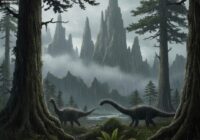
A Million-Year Deluge: How the Carnian Pluvial Event Transformed Earth and Unleashed the Age of Dinosaurs

Around 232–234 million years ago, during the late Carnian stage of the Triassic period, Earth underwent one of its most dramatic climate shifts. This event—known as the Carnian Pluvial Episode (CPE)—marked a period of unusually heavy rainfall lasting around one to two million years, dramatically altering ecosystems both on land and in the sea.  … Read More »